

How AI Can Help (and Harm) Your Supporting Statement
The Rise of AI in Job Applications
Over the past 3 years, the phrase ‘AI’ has been virtually unavoidable. As I type this on my keyboard, desperately trying to avoid accidentally hitting the physical ‘CoPilot’ button that now adorns many similar machines – from Apple Intelligence-integrated iPhones to smart speakers with built-in AI assistants, AI seems to be rapidly permeating into more aspects of everyday life.
It comes as no surprise, therefore, that it would only be a matter of time before AI came along to add another dimension to the job market – specifically with regard to supporting statements. This is something that has been seen on both sides of the hiring process; candidates have seen automation become more prevalent in assessing and responding to their applications, and employers are seeing a higher volume of AI-generated CVs and Supporting Statements being submitted for their roles. Given the increasing prominence of this, and the resulting frustrations expressed by both employers and candidates during the hiring process, I thought I would provide my thoughts on what has driven this trend, how employers spot AI-generated statements, and some best-practice tips for candidates.
Why Candidates Are Turning to AI
For anyone who has engaged in the job market in the past 3 years, it’s no secret that it’s more competitive than it’s been in a long time. Global economic conditions, layoffs across all sectors, and increased automation have all played their part in this, with the Office for National Statistics recording an average of 2.5 unemployed people per vacancy in the period of July – September 2025, the highest figure since July 2015 (excluding pandemic numbers).
This increased competitiveness has resulted in the number of candidates applying to roles increasing rapidly, with volume being the preferred tactic of candidates to improve their chances of gaining an interview. In the past, an increase in volume would mean sacrificing the quality of each application – it wasn’t feasible to send out 50 applications with compelling motivation paragraphs for each different company, with responsibilities and achievements tailored to each individual position. Now, AI allows for hundreds of cover letters to be generated in mere hours, if not minutes. The appeal is that this method allows you to achieve a balance of both volume and quality – in theory, increasing your chances of getting an interview without significantly increasing the input from the end user. But candidates should be aware of the risks of jumping into these tools without a full understanding of how AI-generated content is seen by recruiters, or how it could negatively impact their application.
The Red Flags: How Employers Spot AI-Generated Statements
There are a number of ‘tells’ that reveal when a candidate has used AI to write some or all of their supporting statement. The big one is “Of course! Here’s a strong supporting statement for [job title] at [organization name]” which prefaces the cover letter/supporting statement – a rare, but often amusing oversight. When it comes to the more subtle factors, these tend to be anything from Americanisation of speech (e.g. ‘organizations’ vs ‘organisations’), an overly polished tone lacking personal nuance, and a lack of specificity when discussing a role.
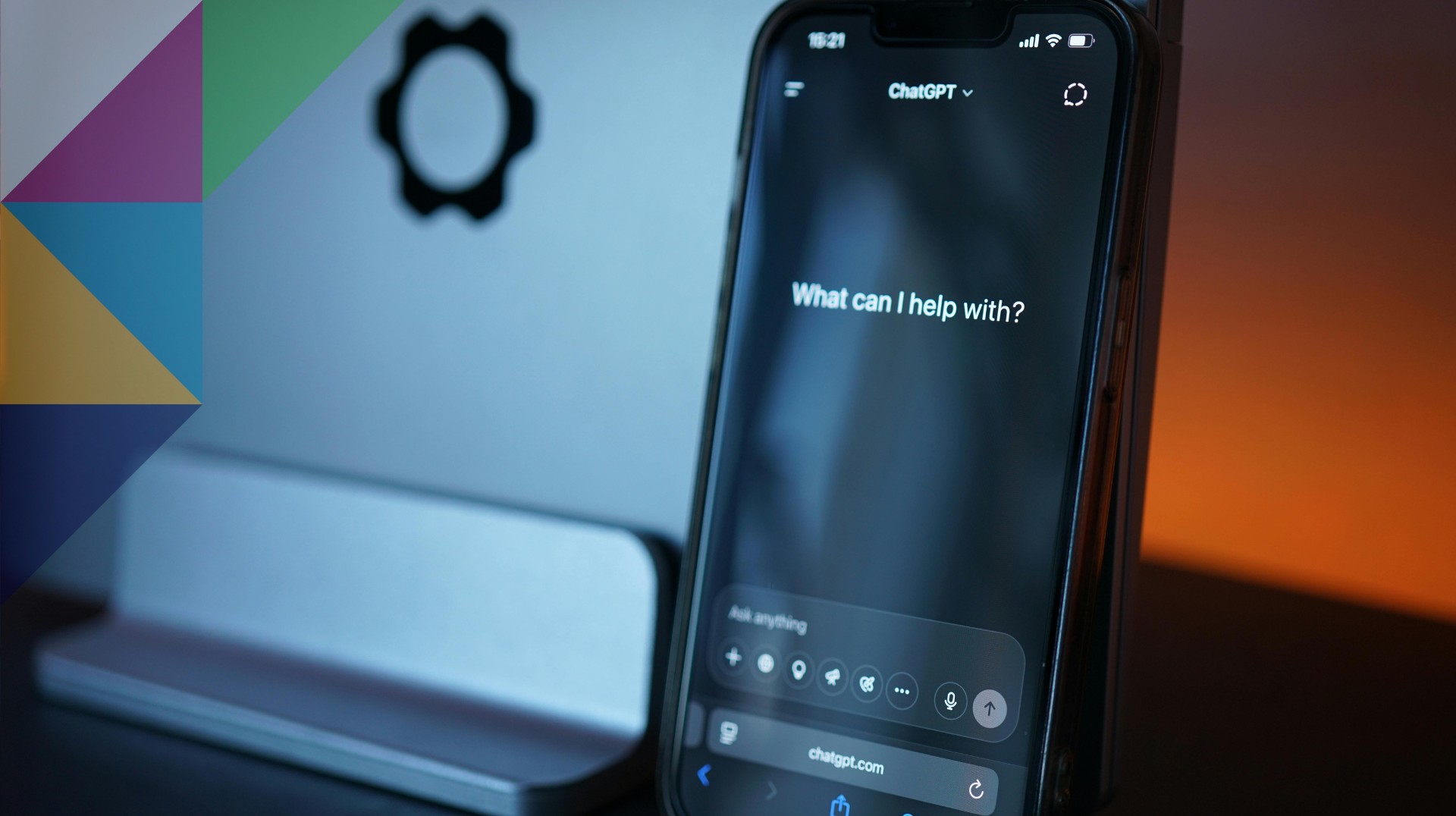
I’ve often noticed that AI (specifically ChatGPT) has a certain ‘voice’ that can be recognised from a mile away, and often becomes impossible to un-notice once you recognise the pattern. If someone has asked AI to ‘write a supporting statement for a financial audit role’ for example, then the AI can sometimes produce an output such as ‘Identified discrepancies and implemented corrective actions, skills valuable for financial auditing and compliance’. This last clause is the real tell – the output comes across almost too polished and confident, with a final note that leaves evidence of the user’s prompt.
If a supporting statement includes phrases along the lines of ‘streamlining business processes’ ‘enhancing operational efficiencies’ ‘unlocking actionable insights’ are examples of significant tells. When a prompt includes very little detail of a person’s achievements, an LLM will often resort to inventing a candidate’s achievements using broad language similar to the above, without referencing specific projects or metrics that reflect their experience.
It’s important to note that these factors, in isolation, do not point immediately towards someone using AI. But given that they are all frequently spotted within AI-generated text, seeing all of these together suggests the use of AI in their applications.
Why is this something which is a concern to employers? A statement that is completely AI-generated can signal a lack of motivation - if it’s clear that this statement is AI-generated, how many others have been submitted with a similar speculative nature? Is this candidate genuinely motivated for this role, or are they just looking for any job? According to a recent survey from TopResume, almost one in five hiring managers would reject a fully AI-generated application, with another 20% considering it a red flag when candidates rely too heavily on artificial intelligence.
It can also point towards a lack of due diligence – if someone hasn’t taken the time to review whether or not their supporting statement could be AI-generated, what questions could this raise about the attention to detail they apply to their day-to-day work.
How to Use AI Well: Tips for Candidates
The hallmark of effective AI use lies in the visibility of its utilisation. If you are using AI to enhance your own experiences and achievements, then the resulting product should be an enhanced version of how you articulate your career, rather than a narrative that has traces of your story within it, but lacks the authenticity and human touch of a good-quality application.
The importance of writing in your own words and language can’t be overstated. A first port of call is to write down exactly why the role you’re applying for is appealing to you. It doesn’t matter if the initial version is messy, just getting the rationale onto a piece of paper is a great start. Then, look at using AI to organise these thoughts into a coherent and compelling structure – but don’t ask it to rewrite it. Treat the resulting output like a blueprint, and build the document with your experiences, your achievements – and most importantly, your voice.
Lastly, ask a peer to review your supporting statement. Does it sound like *you* when they read it? If any aspects of your writing sound like they don’t reflect your voice, then revisit them.
Final Thoughts: A Tool, Not a Substitute
My personal philosophy is that AI is something that should be used, like any tool, to support the work of real people. A tape measure provides a much more accurate measurement of length, with a greater accuracy than the human eye, alongside multiple different uses of measurement. But the person operating the tool is ultimately responsible for making the decision to measure, justifying the rationale of why something is being measured, as well how that measurement is utilised in the future. In my opinion, AI should be treated in a similar fashion - as an extension or amplification of a person’s natural talent, rather than a replacement.
The same principle applies to AI. The technology has been unavoidable for the past 3 years, and while the rate of improvement has been rapid, it currently remains a relatively straightforward task to identify content that hasn’t been generated by a human. The best thing a candidate can do to stand out from the crowd is to produce a supporting statement that is reflective of their experiences, and most importantly, their voice.




Sign up to newsletter
By submitting your details you agree to our T&Cs